Reports of a monster lurking in the water of Loch Ness, Scotland, date back as far as the 6th Century when St Columba is said to have come across a group of Picts burying a man at the side of the River Ness. After they explained a water beast had killed the man while he had been fishing, St Columba sent one of his companions out into the river to lure the monster up from the depths. When it appeared, St Columba raised is hand and drew the shape of a cross in the air while commanding the best to stop it’s attack and never to harm man again. It immediately stopped and swam back down to from where it had come from.
Although there were many more reports of beasts at the Loch after this, Scottish mythology has many stories of creatures that lurk in or near to water, such as the Kelpie, a large, strong horse that was said to lure people down to the banks of rivers with an undeniable desire to ride the horse. Once they were on it’s back, the Kelpie would charge into the water, drowning it’s victim before eating them. The early story of the
Loch Ness Monster is therefore tied in with such mythology and it was not until 1933 that the monster in the form it is now known became popular.
In April 1933 Mrs Mackey, a local hotel manageress, was driving with her husband to Inverness when they spotted a large, black monster close to the top end of the Loch. Later, in July 1933, George Spicer was travelling along the banks of the Loch with his wife when they witnessed a large animal cross the road in front of them as it returned to the Loch. They described the animal as being approximately four feet tall and twenty-five feet tall and as having no distinguishable legs or feet. A similar incident occurred the following month when a young veterinary student called Arthur Grant claimed he nearly hit the best when travelling home on his motorbike.
After these stories were reported, several other claims of sightings followed including what was believed to be the first ever photograph of the monster, taken in November 1933 by Hugh Gray. Mr Gray reported that while walking home from church he became aware of a commotion in the loch and upon seeing something splashing about, he took out his camera and started to take photographs. Only one photograph shows what appears to be a creature on the surface of the water, but the image is so distorted it is difficult to take it as conclusive evidence of the monster.
The most famous photograph was taken the following year by Robert Wilson. The photograph clearly shows the image of the humped back, long neck and serpent like head which is so commonly now associated with the Monster. The photograph gained considerable press coverage and became known as The Surgeon’s Photograph due to Wilson distancing himself from it and not wishing his name used. The use of the association with a surgeon in the title however probably added to the validity as people deemed that someone in such a respected position would be morally responsible and unlikely to not be telling the truth about the photograph. Sadly it transpired the faith put in the occupation was misjudged when in 1994 Christian Spurling made a deathbed confession that the photograph was a fake. Spurling’s step father was Marmaduke Weatherell, a respected big game hunter who, at the end of 1933, had been asked by the Daily Mail newspaper to hunt the monster and produce evidence of its existence. Weatherell subsequently found tracks at the Loch side that he claimed belonged to the monster, but when the photographs were published in the paper, experts at the National History Museum recognised them as being from a hippopotamus. At that time dried hippo feet were often used as umbrella stands, and someone in Wetherell’s position would have easy access to one. The photographs were declared a fake and Wetherell was humiliated and although it was not established whether he was responsible, or someone else had made the footprints and he had failed to correctly identify them it cast doubt on his credibility amongst his peers. According to Spurling, his stepfather had asked him to make a realistic looking model of the monster in an effort to fool the paper. Spurling, who was a model maker, made the now famous monster shape and placed it on top of a toy submarine. They photographed the model in the Loch and then created cropped pictures, to hide the small size of the monster. Robert Wilson was called in to front the hoax as a convincing individual with no connection to Wetherell. The photographs and the story around when Wilson supposedly took them were given to the Daily Mail, the same paper that had humiliated Wetherell the year before.
 Source: http://i.telegraph.co.uk/
The surgeon’s photo resulted in a boost in visitor numbers to the area and reports of sightings of the monster continued, the most recent sighting being in 2011 by the owners of a local store spotted a large, black creature swimming through the water before disappearing. But the question of what the monster is remains unanswered.
To fully consider the reports of a monster, it is necessary to appreciate the size of the loch. The loch is almost twenty-three miles long, over one a half miles wide at the widest point and around 750ft deep. The loch holds more water than the total volume of water held in all the lakes in England and Wales combined. The Loch is therefore easily vast enough for a large creature to survive, and the number of sightings over the years indicates there is something there. Sceptics point to the increased number of sightings since 1933 as an indication of a scam to lure tourists to the area, particularly given that most sightings now occur in Urquhart Bay, which is overlooked by Urquhart Castle, one of the main tourist attractions. This can however easily be explained as the road at the side of the Loch was completed in 1933, resulting in more people visiting. It is reasonable to expect that if there was something mysterious in the Loch, the more people that visit, the more frequently it will be spotted and with Urquhart Castle having clear views over the bay and up the Loch, along with many visitors, it is natural for a lot of sightings to be from the Castle.
This is however where the mystery starts to raise further questions, even for believers in the monster. With so many visitors, and the surface of the Loch being almost permanently covered in pleasure cruisers and smaller boats, why is the monster not witnessed more frequently and why are there not more photographs of it? There are off course numerous photographs that have been published over the years but nothing clearly showing the creature. The effect of so many boats on the Loch’s surface actually results in many of these photographs, where the wakes from the numerous boats collide with each other creating unnatural swells and shapes in the water. Scientists have also demonstrated that the dark, peat filled water of the Loch and unable to maintain a food source for what would have to be a breeding pair of large creatures in the Loch. Any creature would have to come in from the sea via the River Ness, which passes through Inverness, and it is very unlikely that a large creature in the relatively small river would go un-noticed.
There is however another possibility. Loch Ness lies in an area called The Great Glen, which is a natural fault line caused by the collision of two of the earth’s tectonic plates millions of years ago. This collision effectively joined the top part of Scotland to the rest of the country. The fault line however extends well beyond the coast of Scotland. It is estimated to extend from close to Ireland, cutting through the edge of the Isle of Mull off the West coast of Scotland and on beyond the North East coast as far as the Shetland Isles, a distance of around 300 miles. The fault continues at Shetland as the Walls Boundary fault and to the West it connects to fault lines through Ireland and onto the Mid-Atlantic Ridge, which was formed later and cuts the fault line in two. There have been suggestions for many years that there may be underground caves and caverns that feed into Loch Ness and this was added to with the discovery in the 1980’s of deep caves in Urquhart bay. The caves go to a depth of 812 feet, around 60 feet deeper than the Loch was previously believed to have been and these caves had not been detected in earlier sonar scans of the Loch so there could be more not yet discovered. The caves earned the name ‘Nessie’s Lair’ or ‘Nessie’s Cave’ with many speculating that they may lead to deeper caverns. This raises questions as to whether there could be a series of, as yet undiscovered, caves leading up through the fault lines and out to sea that would allow a large creature access to the Loch.
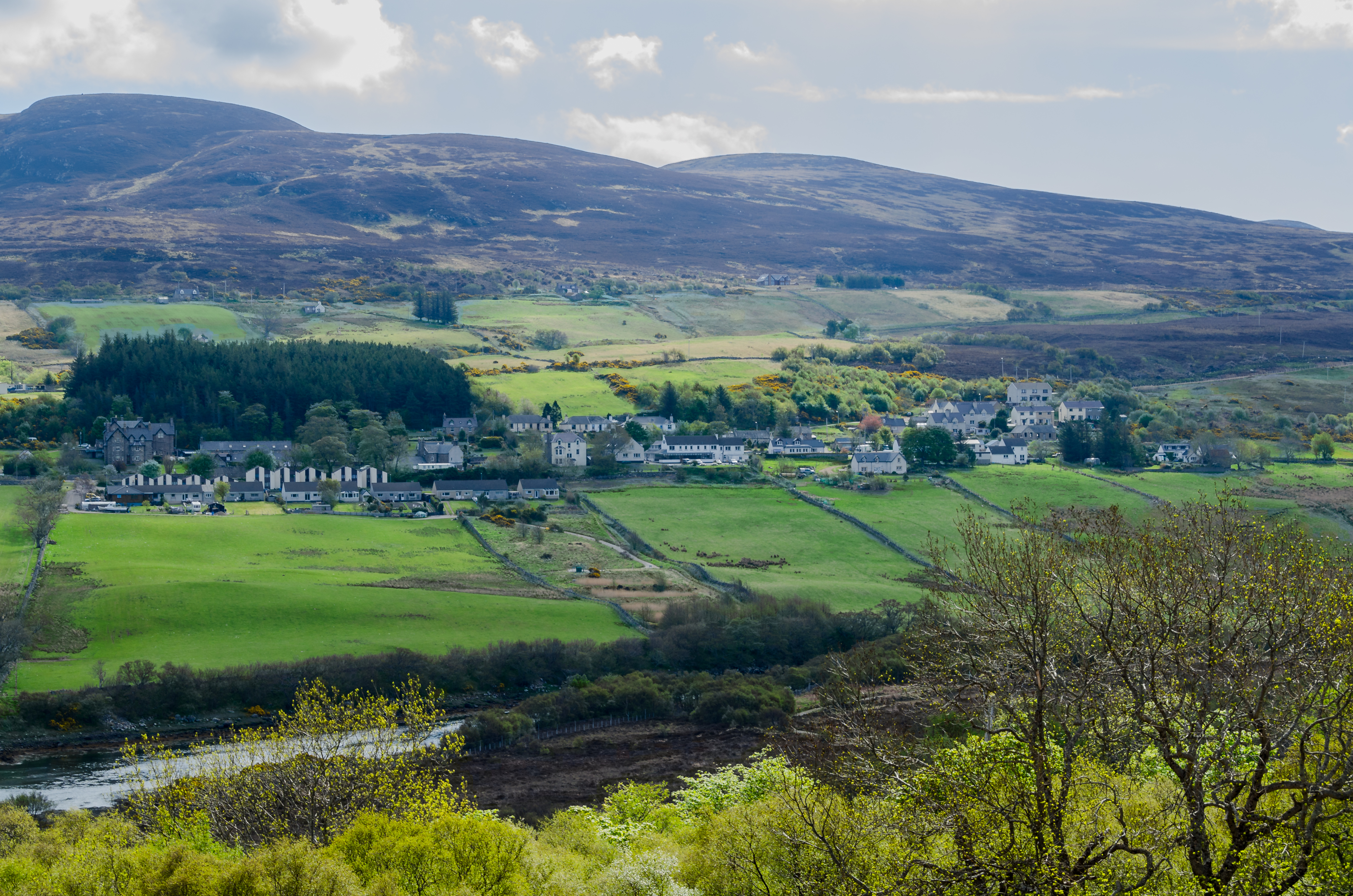
 Loch Ness - by Jim Simpson
Over 90% of the worlds oceans are unexplored, and as we start to explore more, discoveries are being made of previously unknown species of sea life, or species that had been believed to be extinct. It is therefore possible that the Loch Ness Monster is indeed one of these creatures, which travels undetected through underground caverns. The peat in the water would prevent it from being seen when at depth (bear in mind numerous unexplained objects have been detected on sonar). The depth of the Loch creates an unusual situation where the Loch never freezes over. The top 100 feet of water in the Loch varies according to the weather, but below that the water is constant at around 44 degrees Fahrenheit (about 6.6 degrees centigrade) and so perhaps it is only when weather conditions are suitable, raising the temperature of the top layer of water, that the creature rises to the surface, hence very intermittent sightings as it would require the correct weather conditions at the same time as one of the creatures was in the Loch.
I do not believe the monster is any form of plesiosaur as many think, I do however believe there is some form of large creature, probably an eel, much larger than those which have been found so far, which at least occasionally visits the Loch, possibly by the means described above.
G. StewartAbout the Author: Greg Stuart is interested in the paranormal, he read many books on the topic and visited many reported haunted sites and participated in investigations. He writes short fictions. He likes to explore historical buildings and sites. He has recorded several tales of hauntings and also had his own unexplained experiences.
More stories of haunted locations in Scotland are available in the e-book Scotland’s Hidden Hauntings and the paperback Scotland’s Haunted Places, both available on Amazon. Visit Greg’s Author page for more details: http://www.amazon.co.uk/G-Stewart/e/B00924LCYI/ref=ntt_athr_dp_pel_1

 الظهور الإعلامي
 أعلن في شروحات
 إلتحق بفريق العمل
 سياسة الخصوصية


 لهذا الأسبوع